
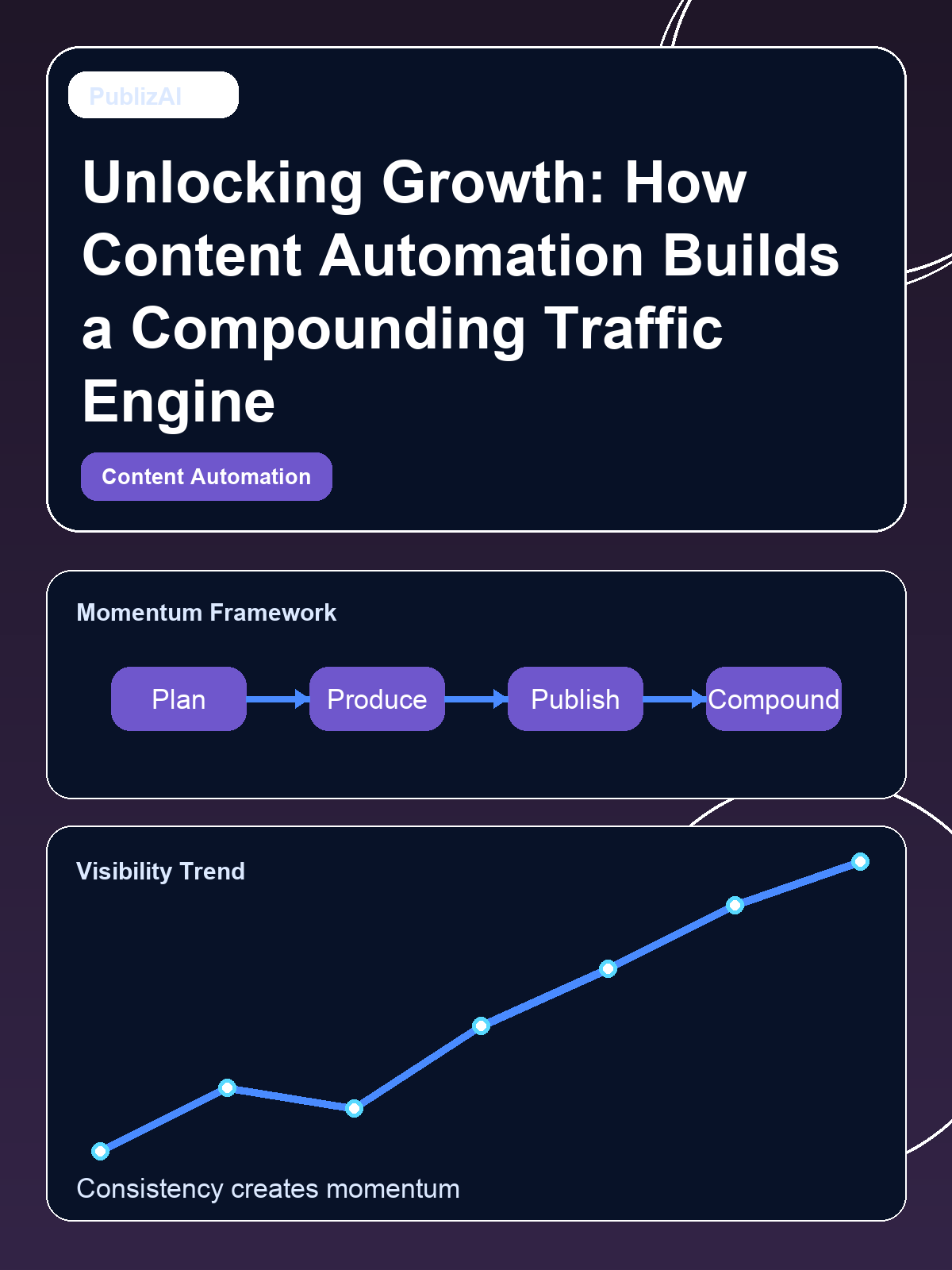
Unlocking Growth: How Content Automation Builds a Compounding Traffic Engine
As a growth-minded business using WordPress, Shopify, or Wix, you understand the importance of inbound traffic. However, inconsistent content creation can hinder your efforts. This guide explores how content automation can transform your business into a compounding traffic engine.
The Problem: Inconsistent Content Creation
Stop Letting Your Website Sit Idle.
Consistency creates momentum. Momentum creates growth.
Many businesses struggle to maintain a consistent content strategy due to time and resource constraints. Without regular updates, your website may not attract the organic traffic needed to fuel growth.
The Solution: Content Automation
By implementing content automation tools and strategies, you can streamline your content creation process and ensure a steady flow of high-quality posts. This systematic approach allows you to focus on strategic growth initiatives while your content engine runs in the background.
Step-by-Step Guide to Content Automation
- Define Your Content Strategy
- Choose the Right Automation Tools
- Create an Editorial Calendar
- Optimize for SEO and AEO
- Measure and Iterate
Tactical Frameworks for Success
Implementing content automation requires a structured approach. By following these tactical frameworks, you can maximize the impact of your automated content strategy:
- Keyword Research and Optimization
- Content Personalization
- Performance Tracking and Analysis
Strategic Insight: Building a Compounding Traffic Engine
Content automation is not just about creating more content—it's about building a sustainable traffic engine that grows over time. By consistently delivering valuable content to your audience, you can attract more visitors, generate leads, and ultimately drive revenue.
Summary
Content automation offers growth-minded businesses using WordPress, Shopify, or Wix a powerful tool for building a compounding traffic engine. By implementing a strategic content automation strategy, you can drive sustainable growth and achieve long-term success.
FAQ
Here are some common questions about content automation:
- Q: How can content automation benefit my business?
- Q: What are the best automation tools for content creation?
A: Content automation can save you time, improve consistency, and help you scale your content efforts more efficiently.
A: Some popular tools include HubSpot, SEMrush, and CoSchedule.
Definition Box: Content Automation
Content automation refers to the process of using technology and tools to streamline and scale content creation, publication, and distribution. By automating repetitive tasks, businesses can save time and resources while maintaining a consistent content strategy.
Direct Answer Block: How Does Content Automation Drive Traffic?
Content automation drives traffic by consistently delivering valuable and relevant content to your target audience. By optimizing for SEO and AEO, you can attract organic traffic and increase your website's visibility in search engine results.
For more information on content automation, install our recommended tools and explore our free 7-week content strategy course.
Stop Letting Your Website Sit Idle.
Consistency creates momentum. Momentum creates growth.